Why Endoscopic Variceal Band Ligation Is Performed
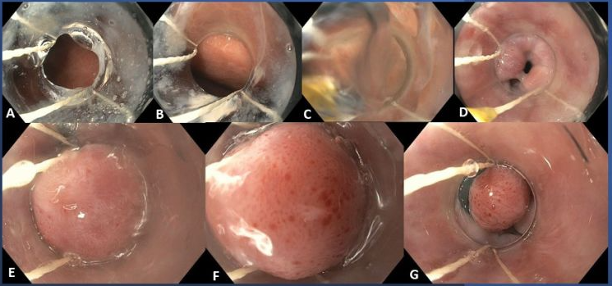
Endoscopic Variceal Band Ligation (EVL) is a minimally invasive endoscopic procedure used to manage bleeding or high-risk esophageal varices. During the procedure, small rubber bands are placed around the enlarged veins to control bleeding and reduce the risk of future bleeding.
Treat Bleeding Esophageal Varices
Endoscopic variceal band ligation is performed to control active bleeding from esophageal varices. It helps stop bleeding by placing small bands around the affected veins, allowing them to close and gradually heal.
To Prevent Bleeding in High-Risk Esophageal Varices
EVL may also be recommended for high-risk esophageal varices that have not yet started bleeding. Banding these enlarged veins can help reduce the risk of potentially serious variceal bleeding.
Esophageal Varices
Dieulafoy's Lesion
Gastric Antral Vascular Ectasia (GAVE)
Endoscopic evaluation and variceal band ligation may be used in the management of the following conditions. Esophageal varices are enlarged veins in the esophagus that can bleed and may require endoscopic treatment such as variceal band ligation. A Dieulafoy's lesion is an abnormal blood vessel that can cause significant gastrointestinal bleeding. Endoscopic assessment helps identify the bleeding source and determine appropriate treatment. GAVE, sometimes called "watermelon stomach," involves abnormal blood vessels in the stomach lining that may cause gastrointestinal bleeding and require endoscopic evaluation and treatment.
Blood in Vomitus
Black Stool (Melena)
Certain symptoms can indicate gastrointestinal bleeding and should be evaluated promptly by a gastroenterologist. Vomiting blood, known as hematemesis, can be a sign of bleeding in the upper gastrointestinal tract, including bleeding from esophageal varices. Black, tarry stools, known as melena, may indicate bleeding in the upper gastrointestinal tract. Prompt medical evaluation is important to identify and treat the underlying cause.
Dr. Pankaj Kumar
MBBS - SMS Medical College Jaipur
MD - RNT
Medical College Udaipur
DM Gastroenterology -
SGPGI Lucknow.
Consultant - Gastroenterology at Max Super Speciality Hospital
Our Service
Contact Info
Phone
+91 9599210449
drpankajkumargastro@gmail.com
Clinic
Ground Floor, B 100A, B Block, Pocket H, Sector 27, Noida, Uttar Pradesh 201301
OPD Time
Mon to Sat - 6 PM to 9 PM