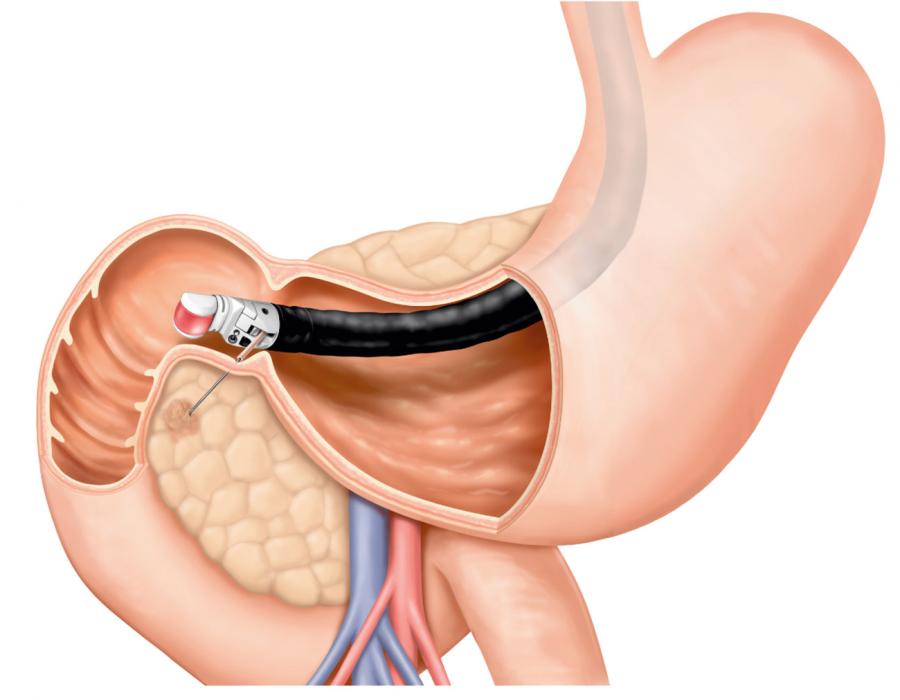
Endoscopic Ultrasound (EUS) – Advanced Diagnosis for Digestive & Pancreatic Diseases
Endoscopic Ultrasound (EUS) is an advanced, minimally invasive procedure that combines endoscopy and ultrasound technology to obtain highly detailed images of the digestive tract and nearby organs, including the pancreas, liver, gallbladder, bile ducts, and lymph nodes. EUS plays a vital role in the early diagnosis, staging, and treatment planning of gastrointestinal and pancreatic diseases.
Our experienced gastroenterologists perform Endoscopic Ultrasound using state-of-the-art equipment to provide accurate diagnosis, guide minimally invasive procedures, and ensure the highest standard of patient care.
What Is Endoscopic Ultrasound (EUS)?
Endoscopic Ultrasound is a specialized procedure in which a thin, flexible endoscope with a miniature ultrasound probe at its tip is passed through the mouth or rectum. This allows the doctor to capture high-resolution images of the digestive tract and surrounding organs that may not be visible on standard imaging tests. When necessary, Fine-Needle Aspiration (FNA) or Fine-Needle Biopsy (FNB) can be performed during the procedure to collect tissue samples for laboratory analysis.
Evaluate pancreatic diseases
Diagnose pancreatic cysts or tumors
Detect bile duct stones
Assess gallbladder disorders
Investigate unexplained abdominal pain
Diagnose gastrointestinal tumors
Stage gastrointestinal cancers
Examine enlarged lymph nodes
Evaluate submucosal (deep) lesions
Perform tissue biopsy (EUS-guided FNA/FNB)
Pancreatitis
Pancreatic Cancer
Pancreatic Cysts
Bile Duct Stones (Choledocholithiasis)
Gallbladder Disease
Esophageal Cancer
Stomach Cancer
Rectal Cancer
Gastrointestinal Stromal Tumors (GIST)
Neuroendocrine Tumors
Chronic Liver Disease
Enlarged Lymph Nodes
Persistent abdominal pain
Unexplained weight loss
Recurrent pancreatitis
Jaundice
Difficulty swallowing
Abnormal findings on CT or MRI
Unexplained digestive symptoms
Gastrointestinal bleeding
Pancreatic cysts or masses
Elevated liver or pancreatic enzymes
Avoid eating or drinking for 6–8 hours
Inform the doctor about all medications and allergies
Discuss blood-thinning medications
Arrange transportation home if sedation is used
Follow all preparation instructions provided by the healthcare team
Mild sedation is administered for comfort.
A flexible endoscope with an ultrasound probe is inserted through the mouth or rectum.
High-resolution ultrasound images of the digestive tract and nearby organs are obtained.
If required, tissue samples are collected using a fine needle (FNA/FNB).
The endoscope is carefully removed after the examination.
The procedure typically takes 30–60 minutes, depending on the complexity of the evaluation.
Highly detailed imaging of digestive organs
Early detection of gastrointestinal and pancreatic diseases
Accurate cancer staging
Minimally invasive procedure
Real-time tissue biopsy guidance
Reduced need for exploratory surgery
High diagnostic accuracy
Short recovery time

Dr. Pankaj Kumar
MBBS - SMS Medical College Jaipur
MD - RNT
Medical College Udaipur
DM Gastroenterology -
SGPGI Lucknow.
Consultant - Gastroenterology at Max Super Speciality Hospital
Our Service
Contact Info
Phone
+91 9599210449
drpankajkumargastro@gmail.com
Clinic
Ground Floor, B 100A, B Block, Pocket H, Sector 27, Noida, Uttar Pradesh 201301
OPD Time
Mon to Sat - 6 PM to 9 PM