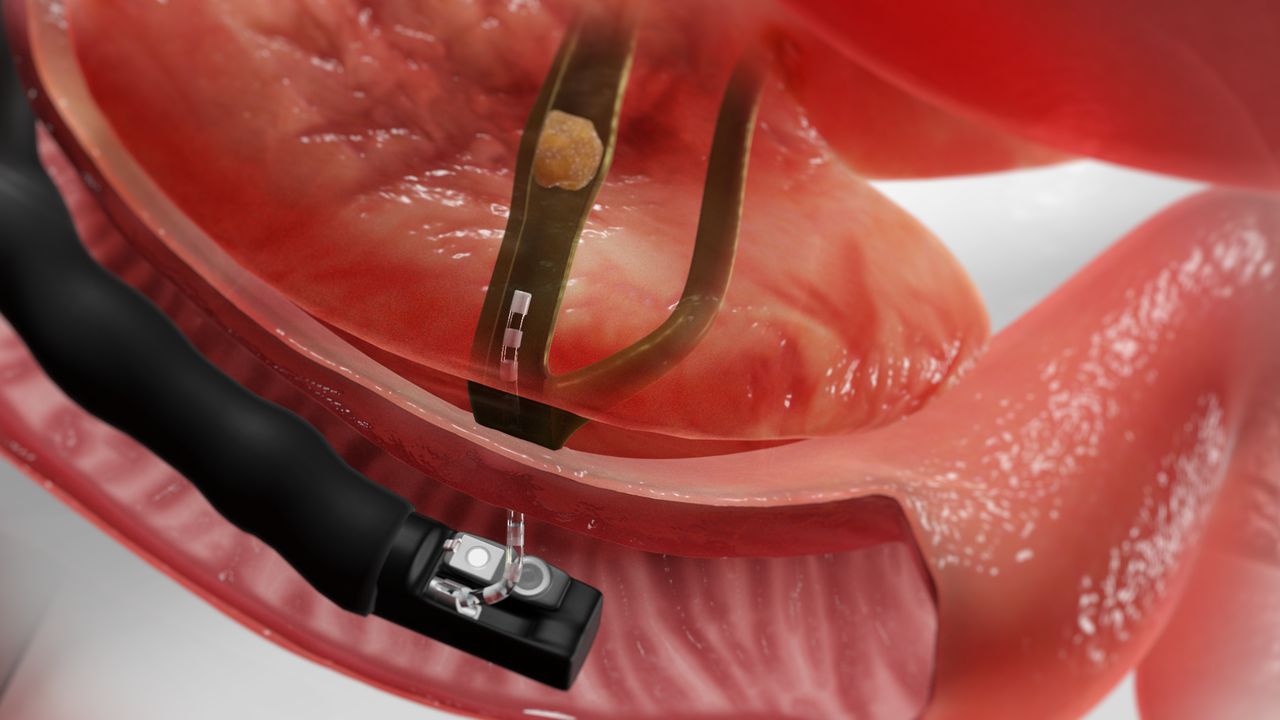
ERCP (Endoscopic Retrograde Cholangiopancreatography) – Advanced Diagnosis & Treatment of Bile Duct and Pancreatic Disorders
Endoscopic Retrograde Cholangiopancreatography (ERCP) is an advanced, minimally invasive endoscopic procedure used to diagnose and treat disorders of the bile ducts, gallbladder, pancreas, and pancreatic ducts. Unlike standard endoscopy, ERCP combines endoscopy with X-ray imaging (fluoroscopy) to identify and treat conditions such as bile duct stones, strictures, leaks, tumors, and pancreatic duct disorders—all in a single procedure.
Our experienced gastroenterologists perform ERCP using state-of-the-art technology to provide accurate diagnosis, effective treatment, and faster recovery while minimizing the need for surgery.
What Is ERCP?
ERCP is a specialized procedure in which a flexible endoscope is passed through the mouth into the stomach and the first part of the small intestine (duodenum). A thin catheter is inserted into the bile or pancreatic duct, and a contrast dye is injected to produce detailed X-ray images. If a blockage or abnormality is found, therapeutic procedures such as stone removal, stent placement, or sphincterotomy can be performed during the same session. ERCP is primarily a therapeutic procedure, meaning it is most often used to treat rather than simply diagnose diseases of the biliary and pancreatic ducts.
Bile duct stones (CBD stones)
Obstructive jaundice
Blocked bile ducts
Pancreatic duct disorders
Bile duct strictures
Bile leaks
Recurrent pancreatitis
Pancreatic strictures
Tumors affecting the bile or pancreatic ducts
Abnormal liver function tests with suspected biliary obstruction
Common Bile Duct (CBD) Stones
Obstructive Jaundice
Biliary Strictures
Pancreatic Duct Stones
Chronic Pancreatitis
Acute Biliary Pancreatitis
Bile Duct Leaks
Pancreatic Duct Leaks
Cholangitis
Bile Duct Tumors
Pancreatic Tumors
Ampullary Disorders
Yellowing of the skin or eyes (Jaundice)
Severe upper abdominal pain
Fever with jaundice
Recurrent pancreatitis
Persistent nausea and vomiting
Dark-colored urine
Pale-colored stools
Itching caused by bile duct blockage
Abnormal liver function tests
Unexplained bile duct dilation on ultrasound or CT scan
Avoid eating or drinking for 6–8 hours before the procedure
Inform the doctor about all medications and allergies
Discuss blood-thinning medications
Arrange transportation home if sedation is used
Follow all preparation instructions provided by the healthcare team
Sedation or anesthesia is administered for comfort.
A flexible endoscope is passed through the mouth into the duodenum.
A thin catheter is inserted into the bile or pancreatic duct.
Contrast dye is injected, and X-ray images are obtained.
If required, therapeutic procedures such as stone removal, sphincterotomy, balloon dilation, or stent placement are performed.
The endoscope is removed after completing the treatment.
The procedure typically takes 30–90 minutes, depending on the complexity of the condition.
Common bile duct stone removal
Biliary stent placement
Pancreatic duct stent placement
Sphincterotomy
Balloon dilation of narrowed ducts
Removal of bile duct blockages
Tissue biopsy or brush cytology
Drainage of blocked bile ducts
Minimally invasive treatment
Simultaneous diagnosis and treatment
Avoids unnecessary surgery in many cases
Effective removal of bile duct stones
Relieves bile duct obstruction
Improves symptoms of jaundice
Short recovery time
High success rate

Dr. Pankaj Kumar
MBBS - SMS Medical College Jaipur
MD - RNT
Medical College Udaipur
DM Gastroenterology -
SGPGI Lucknow.
Consultant - Gastroenterology at Max Super Speciality Hospital
Our Service
Contact Info
Phone
+91 9599210449
drpankajkumargastro@gmail.com
Clinic
Ground Floor, B 100A, B Block, Pocket H, Sector 27, Noida, Uttar Pradesh 201301
OPD Time
Mon to Sat - 6 PM to 9 PM