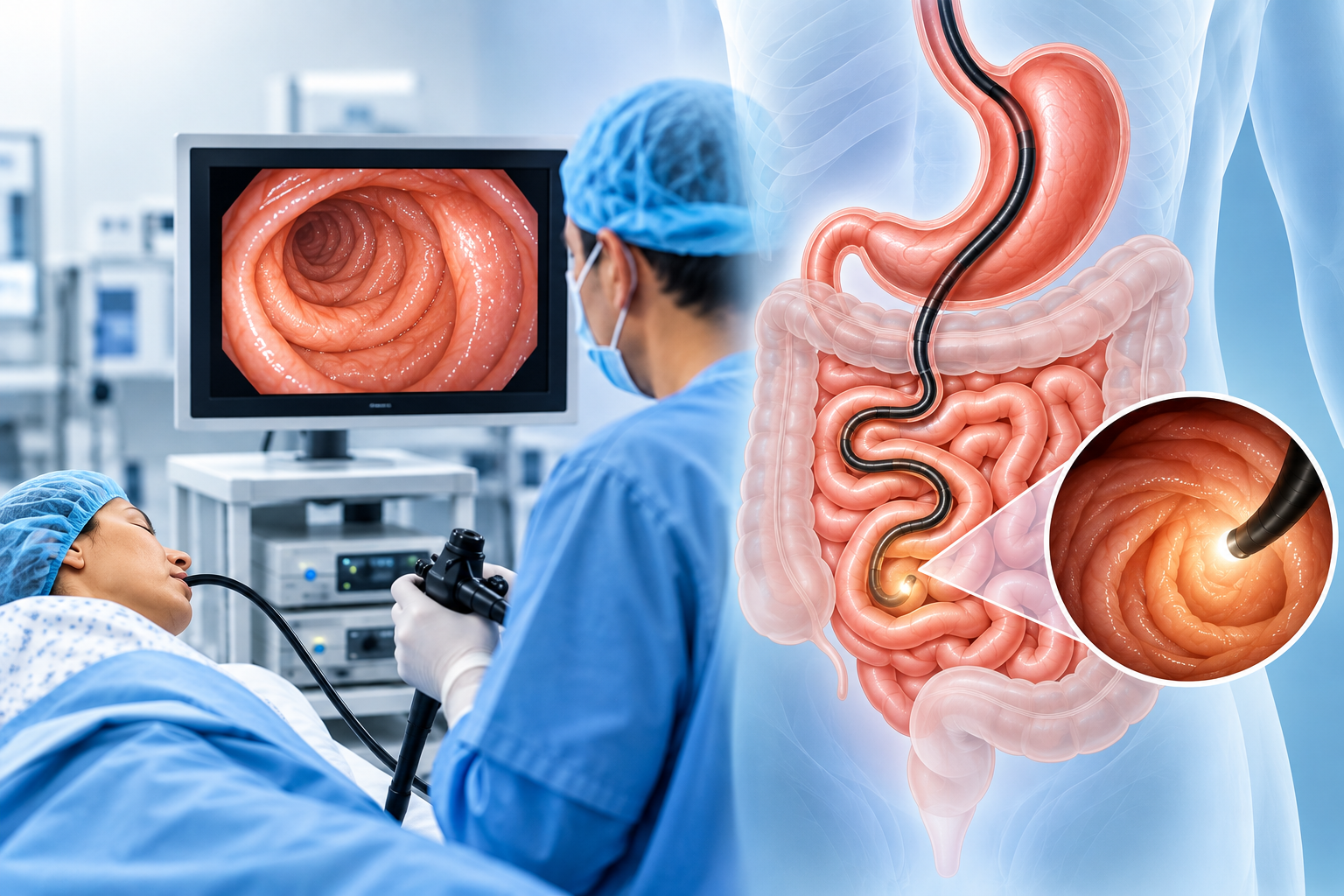
Small Bowel Enteroscopy (SBE)
Small Bowel Enteroscopy (SBE) is an advanced endoscopic procedure used to examine the small intestine, an area that is difficult to reach with conventional upper gastrointestinal endoscopy or colonoscopy. It allows a gastroenterologist to closely examine the lining of the small bowel and, when required, perform diagnostic or therapeutic procedures.
What Is Small Bowel Enteroscopy?
Small Bowel Enteroscopy is a specialized endoscopic technique in which a flexible endoscope is advanced beyond the stomach and into the small intestine. The procedure provides direct visualization of areas of the small bowel that may not be accessible through routine endoscopy. Depending on the patient's condition, enteroscopy may be used to identify the source of bleeding, investigate abnormal findings, obtain tissue samples, or perform selected treatments.
Why Is Small Bowel Enteroscopy Performed?
Small Bowel Enteroscopy may be recommended when a problem is suspected in the small intestine and other investigations have not provided a clear diagnosis. It can help a gastroenterologist evaluate unexplained gastrointestinal bleeding, suspected small bowel abnormalities, persistent unexplained symptoms, or findings detected on imaging or capsule endoscopy. In selected cases, the procedure can also be used for treatment during the same session.
Unexplained Gastrointestinal Bleeding
Suspected Small Bowel Tumours or Lesions
Small Bowel Polyps
Abnormal Findings on Capsule Endoscopy
Suspected Small Bowel Disease
Small bowel enteroscopy may be considered when detailed evaluation of the small intestine is required. The gastroenterologist determines whether enteroscopy is appropriate based on symptoms, previous test results, imaging findings, and the patient's overall clinical condition.
Before the procedure, the patient is assessed and prepared according to their medical condition and the type of enteroscopy planned. During the procedure, a specialized flexible endoscope is carefully introduced through the mouth and advanced through the upper gastrointestinal tract into the small intestine. The gastroenterologist examines the intestinal lining using the endoscope's camera. If necessary, tissue samples may be taken for biopsy or selected abnormalities may be treated using specialized endoscopic instruments. Sedation or anesthesia is generally used to help maintain patient comfort during the procedure.
Detailed examination of the small intestine
Identification of potential bleeding sources
Biopsy of suspicious or abnormal tissue
Evaluation of abnormal findings from imaging or capsule endoscopy
Selected endoscopic treatments when clinically appropriate
Direct visualization of the small intestine
Helps investigate unexplained gastrointestinal bleeding
Allows targeted tissue biopsy when required
Can help evaluate abnormal small bowel findings
Selected diagnostic and therapeutic procedures can be performed
Persistent or unexplained gastrointestinal symptoms, recurrent gastrointestinal bleeding, black or tarry stools, unexplained anemia, or abnormal findings on gastrointestinal investigations may require further evaluation. If routine endoscopy or imaging does not identify the cause of the problem, a gastroenterologist may recommend additional tests, including capsule endoscopy or Small Bowel Enteroscopy, depending on the clinical situation.

Dr. Pankaj Kumar
MBBS - SMS Medical College Jaipur
MD - RNT
Medical College Udaipur
DM Gastroenterology -
SGPGI Lucknow.
Consultant - Gastroenterology at Max Super Speciality Hospital
Our Service
Contact Info
Phone
+91 9599210449
drpankajkumargastro@gmail.com
Clinic
Ground Floor, B 100A, B Block, Pocket H, Sector 27, Noida, Uttar Pradesh 201301
OPD Time
Mon to Sat - 6 PM to 9 PM